Today in my technology and culture class we were discussing and comparing web 2.0 tools. Everyone had so much to say about their own favorite web application and it wasn't until after class that I realized one of my favorite websites can be classified as a web 2.0 tool. Grooveshark is a relatively new website that was introduced to me by one of my best friends. It allows you to listen to almost any song in the world for free, it is almost instantaneous and it has many features such as the option to create your own individual playlist or library. You can mark songs or albums as favorites and it saves what you have chosen. It displays favorite and most popular songs in a different category and they give you the choice of downloading, sharing (by email), downloading the ringtone, or adding the song to your 'favorites' folder. It is simple to use and best of all it costs absolutely nothing. There is also an application within Grooveshark called Grooveshark radio. Grooveshark radio compiles songs for you to listen to based on the songs you have entered into the website's search box. It is somewhat like iTune's Genius, except the difference between the two is that Grooveshark radio's songs are chosen by Grooveshark users, unlike Genius which is computer-generated. You can 'smile' or 'frown' at the songs that are listed and it saves your choice, so you never have to listen to music you don't want to listen to. It never really occured to me how much we all use web 2.0 tools until I was required to research them for school. To be honest, I didn't even know what they were until I read a definition on them and was given a list of some popular web 2.0 tools. They are extremely helpful and rewarding, and they can make our technology life so much easier, faster, and more modern if we learn about and use the right tools. I am very glad I was introduced to Google Reader, it saves me so much time now! Check it out for yourself here.
Tuesday, November 24, 2009
Just Another Music Website?
Today in my technology and culture class we were discussing and comparing web 2.0 tools. Everyone had so much to say about their own favorite web application and it wasn't until after class that I realized one of my favorite websites can be classified as a web 2.0 tool. Grooveshark is a relatively new website that was introduced to me by one of my best friends. It allows you to listen to almost any song in the world for free, it is almost instantaneous and it has many features such as the option to create your own individual playlist or library. You can mark songs or albums as favorites and it saves what you have chosen. It displays favorite and most popular songs in a different category and they give you the choice of downloading, sharing (by email), downloading the ringtone, or adding the song to your 'favorites' folder. It is simple to use and best of all it costs absolutely nothing. There is also an application within Grooveshark called Grooveshark radio. Grooveshark radio compiles songs for you to listen to based on the songs you have entered into the website's search box. It is somewhat like iTune's Genius, except the difference between the two is that Grooveshark radio's songs are chosen by Grooveshark users, unlike Genius which is computer-generated. You can 'smile' or 'frown' at the songs that are listed and it saves your choice, so you never have to listen to music you don't want to listen to. It never really occured to me how much we all use web 2.0 tools until I was required to research them for school. To be honest, I didn't even know what they were until I read a definition on them and was given a list of some popular web 2.0 tools. They are extremely helpful and rewarding, and they can make our technology life so much easier, faster, and more modern if we learn about and use the right tools. I am very glad I was introduced to Google Reader, it saves me so much time now! Check it out for yourself here.
Monday, November 23, 2009
All Those Grayscale Screens
I remember when I wanted a cell phone sooooooo badly, the black and white screened bricks that seemingly everyone except myself had. Then I wanted an ipod, again with the black and white screen. I was the happiest little girl in the world when I got one for my birthday, all my friends were so jealous because I was so cool with my brand new technology. Then time passed and cell phones and ipods evolved. Soon there were color screens everywhere and black and white screens were history. Ipods went from holding 500 songs to having the storage capacity of 80G. Then came the laptops. Eventually we were introduced to the Macbook Air. Featherlight and as thin as a pencil, the Macbook Air was the most advantageous of all laptops and everyone was taken aback by how thin it was. I thought it was the coolest thing ever, I had never seen anything like it. I still think it is pretty amazing, but now I have discovered a new laptop that is possibly even physically better looking than the Air. The Dell Adamo XPS is just 9.9mm thick, and weighs in at less than 1.5kg. I am definitely still a Mac person, I don't think I could make the transition to Dell...however I find it so interesting that technology is changing like this. Why is everything getting smaller, how does this reflect our society as a whole? It just leads you to think, what next?
Wednesday, November 18, 2009
Bringing Up the iTunes Price Change
Remember when songs on iTunes used to be 99 cents? iTunes then decided to raise the price of popular new songs and some classics to $1.29. Many people did not understand why the standard price that everyone had known and accepted was raised 30 cents. I thought that paying $1.30 for a song doesn't seem that much, but when everything starts to add up, it gets a lot more expensive than one would like. When I realized iTunes wasn't going to be changing the price back to what it was before, I decided to just accept it and buy less songs so that I wasn't spending more than I had previously been spending. My reaction at first was frustration and then I gave in, but how did others react? Not nearly the same way. Facebook groups and pages sprung up the day iTunes raised their prices, people set their statuses demanding the prices be changed back.
Songs used to be 99 cents each, no matter what artist or genre, or year. Now, certain "oldies" are only 69 cents, the new songs or the popular classics are $1.29, and just about everything else is 99 cents. But who decides what songs get set to what price? Apparently, Apple is setting the prices based on the wholesale prices set by the music labels. Are some artists annoyed by the fact that other artists are selling for more than they are? I would be, but according to Apple, the artists clearly have no say in what their music sells for. Some Disney songs are going for 99 cents, as well as certain Coldplay and Katy Perry Songs. I'm not sure about anyone else but I would not be too happy to be placed in the same pricing category as a Disney star..But maybe that's just me. I wonder how much of a profit Apple has made from each song being worth 30 cents more. It would be interesting to find out what everyone else thinks of the pricing now, 8 months later. Have you gotten used to it or do you still want it cchanged back? The Facebook groups seemed to have settled in the sevarity of their comments on the $1.29 price, but is that because they have come to reason with it or is everyone simply over it?
Tuesday, November 17, 2009
Where Exactly Are You Going?
Do you know? You may know the address..but does that really mean all that much? Along with almost everything else in the world of technology, virtual maps are becoming increasingly advanced, with features being added to make search results more specific and easier to navigate. Miguel Heft of The New York Times writes about these state-of-the-art maps and about a man called Richard Hintz, who edited maps to suit his own desires and expectations. Do people these days prefer virtual or physical maps? And are they as helpful in locating as they advertise? One of the main reasons Mr. Hintz edited the maps and pinpointed certain locations was because he felt that the outcome of his search on the virtual maps was either inaccurate or not detailed enough. With the development of Google Maps and Google Earth, which allows users to spot specific locations via satellite and zoom in so close that government officials forced them to blur out license plates on cars and people's faces, is our perception of the world more broad? I personally love Google Earth, and it's incredibly interesting to be able to look at almost any place in the world in such great detail. I think that being able to see real arial views of locations can really help you understand a place better and because the picture is such great quality it feels like you are really there. In class, we talked about Wiki pages and how anyone can edit them; Wikipedia had problems with the amount of people editing certain pages so they enforced a 4-day membership rule to prevent farcical editing. Should people be able to edit virtual maps just as they are able to edit Wiki pages? The problems with public editing of maps is that they can become over edited and some people might not take them seriously. Also there is the factor of legitimacy of the maps after anyone in the world has edited them, does this make them less reliable? Or will people have mixed opinions like they do of Wikipedia's legitimacy? However, with the editing of maps, people can discover so many new places that are unique and special to different people and it could really enhance searching because there would be so much more information about places out there. Check out Google Maps and Google Earth.
Also, I found this video really cool. Before last century, man had never walked on the moon. Now we can virtually place ourselves there. I think it's amazing.
Monday, November 16, 2009
The New Concept of Virtual Wallets
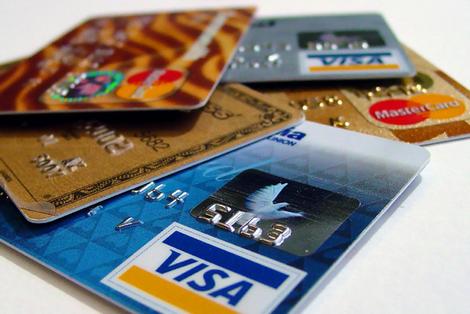
Today, I read an article in The New York Times that really interested me. I have always been a fan of online shopping, and I think that the fact that anyone in the world with a credit card can buy almost anything from clothes to food instantly is one of the greatest advancements technology has made in the past decade. Something that was brought to my attention is the method of paying. You can buy anything with credit cards, pre-payments, or other methods such as Pay-Pal. The article in The New York Times brought up the fact that the development of virtual wallets is in process. Is this new concept safe? And how popular will it become? I never expected Pay-Pal to become as popular as it is but it escalated into such an accepted and widely used method for paying that I was shocked, and I created a Pay-Pal account. With internet fraud being a major issue, that is thankfully gradually dying down with the advancement of internet site protection, virtual wallets that have all of your bank details, credit card details, and personal information seem somewhat unsafe to me, although maybe, just like with Pay-Pal, my opinion will change as they become more commonly accepted and used.
Sunday, November 15, 2009
100-Year-Old Babies
A main aspect of technology advancement that I have always very strongly believed in is the development of new drugs and treatments for illnesses and diseases. I think that this generation and all the generations that will follow have a major advantage in terms of medicines, medical care, and overall knowledge that previous generations did not have. Is it scary that a child born in 2009 has a life expectancy of 100 years? Some would say this is a miraculous achievement, others however might not share the same enthusiasm.
The technological advancement of medicine is a very heated topic, as different opinions can start to become contentious when issues such as religion, human rights, and money emerge. Perviously, my opinion on technology was that it can only help us, although when I began to think more and more about it on different levels many possible problems came to mind. Many people that are in critical conditions are living on life support, i thought, and this is great that they can survive thanks to major evolution of medical treatments, however when I brought this up with my mother, who has been an oncologist, obstetrician, and surgeon for the past 16 years, she said something that turned my thoughts around. I was talking about life support and how amazing it is that we have it, but she said that she knows more people who would turn down the option of living off life support if they were ever faced with the choice. "Eventually people reach a certain stage of their life where they feel as though they wont be losing anything more". Also, life support can be incredibly expensive, which made me wonder if many people who are not as lucky as others are willing to sacrifice their own life in order to prevent their families from being put under financial pressure. And does this make it wrong for people to want to survive off life support even if money is tight? Also, should age be an issue? And for those who can't have a say, should others be eligible to be their voice? On a more broad scale, the development of drugs has escalated into a multi-million dollar industry, and further development costs have risen profoundly. A recent article in the New York Times opened my eyes to the world of pharmaceutical drug costs, numbers I never expected to see in the area of drug research. Not only billions of dollars, but also substantial amounts of time are necessary for further research. Based off my personal beliefs , I think that every penny and second spent is worth it, but I'm sure others would have a different say on this. It would be so interesting to find out people's opinions and to hear their rationale for their outlook.
Thursday, November 5, 2009
The Future of Technology, How Will it Affect Us?
I found this article to be very interesting, it made me think about not only what cell phones will be like in the future, but also about what everything else will be like.
This passage spoke the most to me,
"Just imagine a device with an 8-inch fold-out screen, a big virtual keyboard for easy text input, numerous sensors to detect your surroundings, and software smart enough to anticipate your needs and sharp enough to respond to conversational commands.
Open up the device, point it at the street and ask it to show you what the place looked like 200 years ago, and it offers a photo or video. Ask it where to eat lunch and it highlights a restaurant that suits your tastes. If you are heatedly debating food choices with a companion when someone of marginal importance tries to call you, the phone will know better than to interrupt."
It reminded me and related my opinions to the TED video of how technology in the future will be. I think all these changes and advancements in technology that society is creating can either help or hurt, so many things have the potential to improve life as we know it like the discovery of treatments for seemingly incurable diseases or a cure for global warming, but then again technology can also potentially ruin everything the human race has strived for since time began. Eventually technology will be so incredibly advanced that people will not have to do anything for themselves, make anything for themselves, or even worse..think for themselves. It's thrilling to think of all the possibilities technology can generate, but I believe we have to be careful as to not let it get out of hand.
Tuesday, November 3, 2009
Xbox Rehabilitation
Check this out.
I found this to be entertaining in a way, it made me think, "look what technology has done to people", but then it also occurred to me that it could be argued that people have done this to themselves, with the help of technology. When I read this article, the first thing that I related it to was my little brother, and how he seems like the kind of person who will end up in rehab for video-gaming. How much of an effect does gaming have on society? Another question that I would love to further investigate is if people get so addicted that their grades begin to slip because of it. I found this topic interesting because it made me contrast previous generations with our current generation on the issue of how they used to spend their free time, and how drastic the changes are.
Monday, November 2, 2009
Plz Dnt Txt Wen Ur Drivin
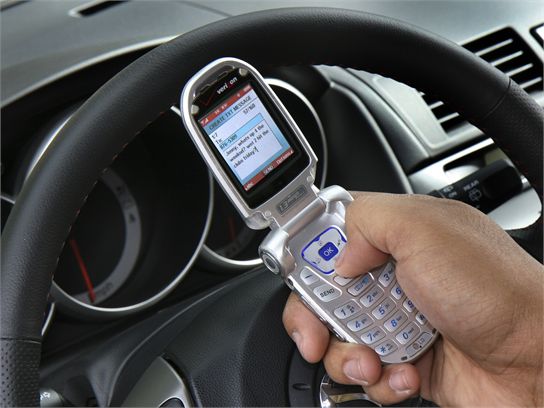
In the US, it is illegal to drive while texting on your cell phone in some states. A girl I worked with in New York in the summer was from Florida, and she was so taken aback when the police pulled her over when she was driving and fined her $120. The day after she got the ticket I remember her saying to me, "In Florida, everyone texts and drives, it's not a big deal. This is ridiculous!". Recently, there has been much talk on whether or not to make it illegal for ALL states.
In Britain, it is a serious offense if you text while driving. You can get points on your license and if you receive enough of these you can lose your license. Two recent articles in the New York Times were brought to my attention this morning; my mom, who frequently checks the NY Times forwarded these links to me after she ironically crashed her car into a lamp post (oops) because she was replying to a text I had sent her.
Here are the links:
click
click again
These articles sparked a few questions in my head, like what if the texting while driving ban wasn't in place in Britain, like it used to be? And how many people have been saved by the law? I am sure many people have a lot of questions and comments about this law, especially in the United States where it is legal some places and illegal in others. I fully believe in the relevance and importance of this law but I would love to hear others' opinions on it. Do you think it's pointless or too strict, or do you support the states and governments who enforce it?
For people who want to be safe drivers but are still addicted to their cell phones, there is a solution; wireless headsets. These are cheap and they are also 100% legal in the UK. Many would argue that even these distract drivers and are just as bad as cell phones, but I disagree, because when you have a wireless earpiece you can concentrate on the road without looking down at your phone.
In Britain, texting while driving can get you put in jail. Here is a video explaining the consequences.
Hopefully this law will soon be enforced everywhere, because although texting while driving doesn't seem like a big deal when you're doing it, it can ruin lives including your own. Wait 'til you are out of your car, it will be worth it!
Subscribe to:
Posts (Atom)